

bathroom-remodel · Carmichael
Carmichael ranch homes: what hides behind 1950s-1970s walls
May 25, 2026 · Tanbark Build Co.
Why Carmichael ranches are special
Carmichael's housing stock is dominated by single-story ranch homes built from the late 1950s through the early 1970s — a sweet spot of solid, well-built homes that have aged gracefully but contain several era-specific materials and systems that show up consistently when you open a wall.
If you're remodeling a Carmichael ranch, the project manager who's worked on a dozen of them brings an immediate advantage: they know what's likely behind the drywall before they pick up a hammer. The five conditions below appear in some combination on almost every Carmichael remodel we touch.
1. Galvanized supply lines
Galvanized steel was the standard residential water supply line through about 1970. It corrodes from the inside out, restricts flow over decades, and eventually fails. By 2026, every Carmichael home with original galvanized supply is either failing or close to it.
How to spot it before demo: turn on the cold water in the farthest fixture from the main while another fixture is running. Significant pressure drop means restricted lines, almost always galvanized.
How we handle it: during any bath or kitchen remodel where galvanized is found, we re-pipe the affected branch in copper or PEX during the rough phase. Adds 1-2 days to the timeline. If multiple bathrooms or the kitchen are involved, we sometimes recommend a whole-home re-pipe instead of patchwork — the math usually works out.
2. Aluminum wiring
Aluminum branch-circuit wiring was used residentially from about 1965 through 1973. Carmichael ranches built in that window often have it, particularly on dedicated kitchen and laundry circuits.
Why it matters: aluminum expands and contracts differently than copper, which can loosen connections at outlets and switches over time, creating fire risk.
How to spot it: check exposed wiring at the panel or at outlets. Aluminum is silver in color (copper is reddish). The brand "AL" is often stamped on the jacket of older NM cable.
How we handle it: during a remodel that adds new circuits, we typically install COPALUM connectors (the only UL-listed permanent fix) at every outlet/switch on aluminum circuits in the remodel area. Full house remediation is a separate project; the partial remediation is part of the bath or kitchen scope.
3. Asbestos in vinyl floor tile or sheet flooring
Pre-1981 vinyl floor products commonly contained asbestos in the tile body and in the mastic adhesive. Carmichael homes from this era often have the original kitchen and bath flooring in place — or worse, NEW flooring laid on top of the original.
How to spot it before demo: any 9"×9" floor tile in a Carmichael ranch should be presumed asbestos until tested. Same for sheet vinyl with backing that's tan or black.
How we handle it: if test results come back positive (we send samples to an accredited lab; results in 24-48 hours), we bring in a California-licensed asbestos abatement contractor to remove the affected flooring under containment before any other demo. The cost is real but the alternative (uncontrolled removal) is a serious health and legal risk for everyone in the home.
4. Knob-and-tube on the periphery
Some Carmichael homes built in the late 1950s have knob-and-tube wiring on a few peripheral circuits even though the main panel and most circuits are modern. Common spots: the original detached garage now attached, a converted laundry porch, or an old screened patio that's now interior space.
Why it matters: knob-and-tube isn't always unsafe, but it can't be buried in insulation, and most modern insurance policies treat its presence as a flag.
How we handle it: during demo we identify any knob-and-tube in the work area and re-circuit it with modern romex on a code-current breaker. We don't replace knob-and-tube outside the work area unless asked.
5. Under-circuited electrical panels
Carmichael ranches often have original 100-amp panels. That was generous in 1962 and is tight in 2026 with modern dishwashers, induction cooktops, EV chargers, heat pumps, and HVAC.
Why it matters: any meaningful kitchen or bath remodel will add at least one new dedicated 20A circuit (often two or three). A panel that's already near capacity needs an upgrade — 200-amp is the modern standard.
How we handle it: during the walk-through we read the panel and count the breakers. If the panel is full or near-full, we add a panel upgrade to the project quote. A 100A → 200A upgrade is a 1-day project handled by a licensed electrician under permit (PG&E has to disconnect and reconnect the service drop).
The contingency conversation
Because at least one of these five conditions usually shows up on a Carmichael remodel, we build a hidden-conditions contingency line into every Carmichael estimate. The size of the line varies with the age of the home and the scope of the project, but it's there explicitly so the homeowner sees the buffer rather than getting surprised on demo day.
If the contingency isn't used, you get it back. If it is used, it's pre-approved scope — no awkward "change order" conversation mid-project.
Why this matters before you sign
When you collect remodel bids in Carmichael, ask each contractor:
> "What hidden conditions do you expect in a home like mine, and how is each one handled in your quote?"
A contractor who says "we'll handle it if it comes up" is going to surprise you with a change order. A contractor who says "we expect galvanized supply in the front-bath branch, here's our re-pipe line item; if we don't find it we credit you back" is the one who's done the work.
That's the version of the conversation a Tanbark project manager has with you in the walk-through. By the time you sign, the surprises are mostly priced in.
The walk-through
A Tanbark project manager walks the home with you, reads the panel, eyes the visible plumbing, identifies the era of the wiring, and flags which of these conditions to plan for. You leave with an itemized written estimate within 48 hours, hidden-conditions contingency clearly listed.
Free · No spam · No phone calls
Get the 2026 Sacramento Remodel Planning Kit.
Five planning tools we built for our own customers — scope worksheet, contractor question list, permit reality check, budget blow-up warnings, and our material spec sheet. Sent instantly to your inbox.
- Scope-Built Quote Worksheet — for apples-to-apples bids
- 10 questions every Sacramento contractor should answer
- Sacramento permit reality check by jurisdiction
- The 5 line items that blow most remodel budgets
- Material + finish cheat sheet (what to spec, what to skip)
Keep reading
Real Sacramento projects, scope guides, and articles paired with this piece.
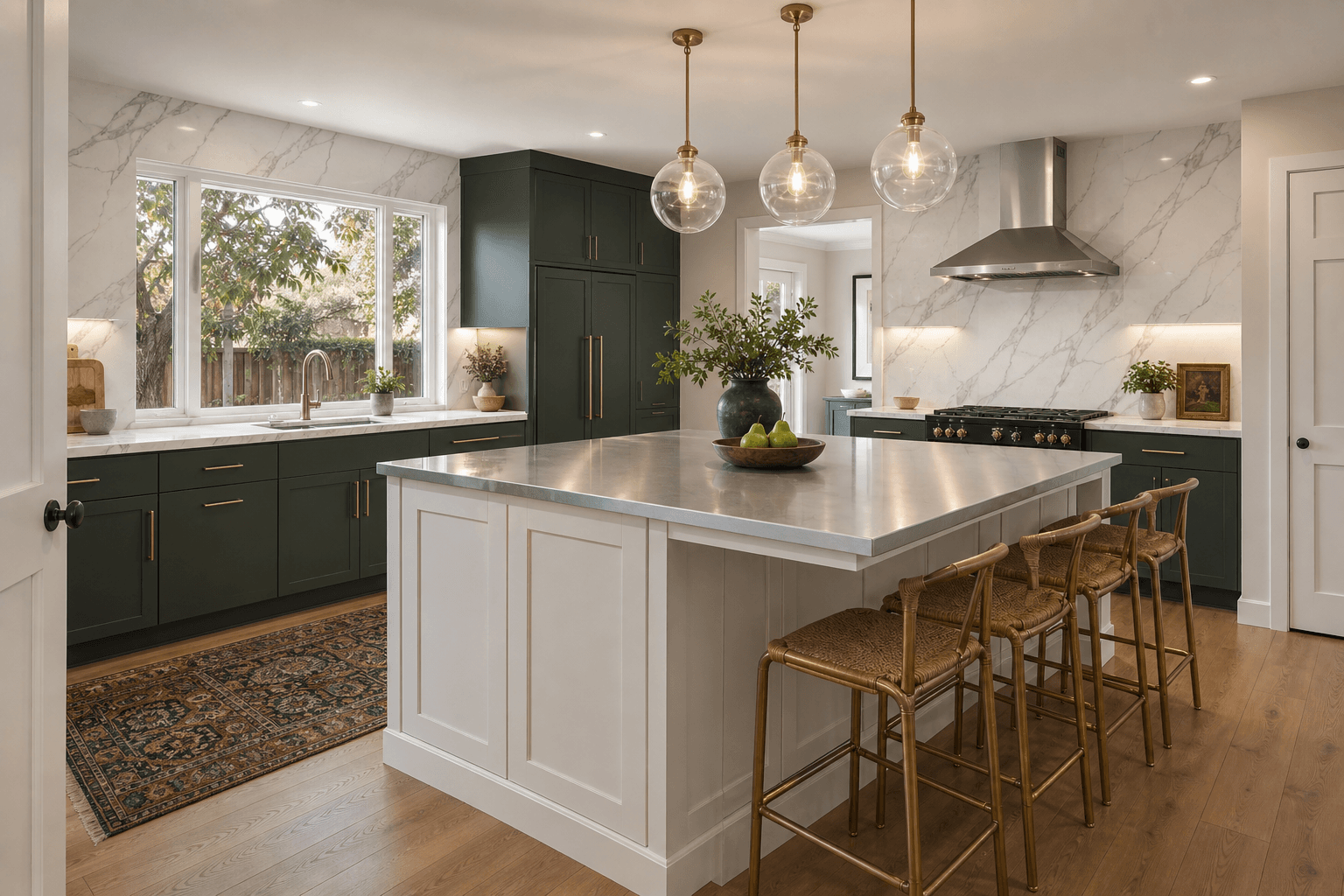
Design concept
Forest-green galley kitchen
Deep forest-green flat-panel perimeter, white shaker island, full-height honed Calacatta marble backsplash, panel-ready French-door refrigerator, dual-fuel range with brass knobs.
See the scope
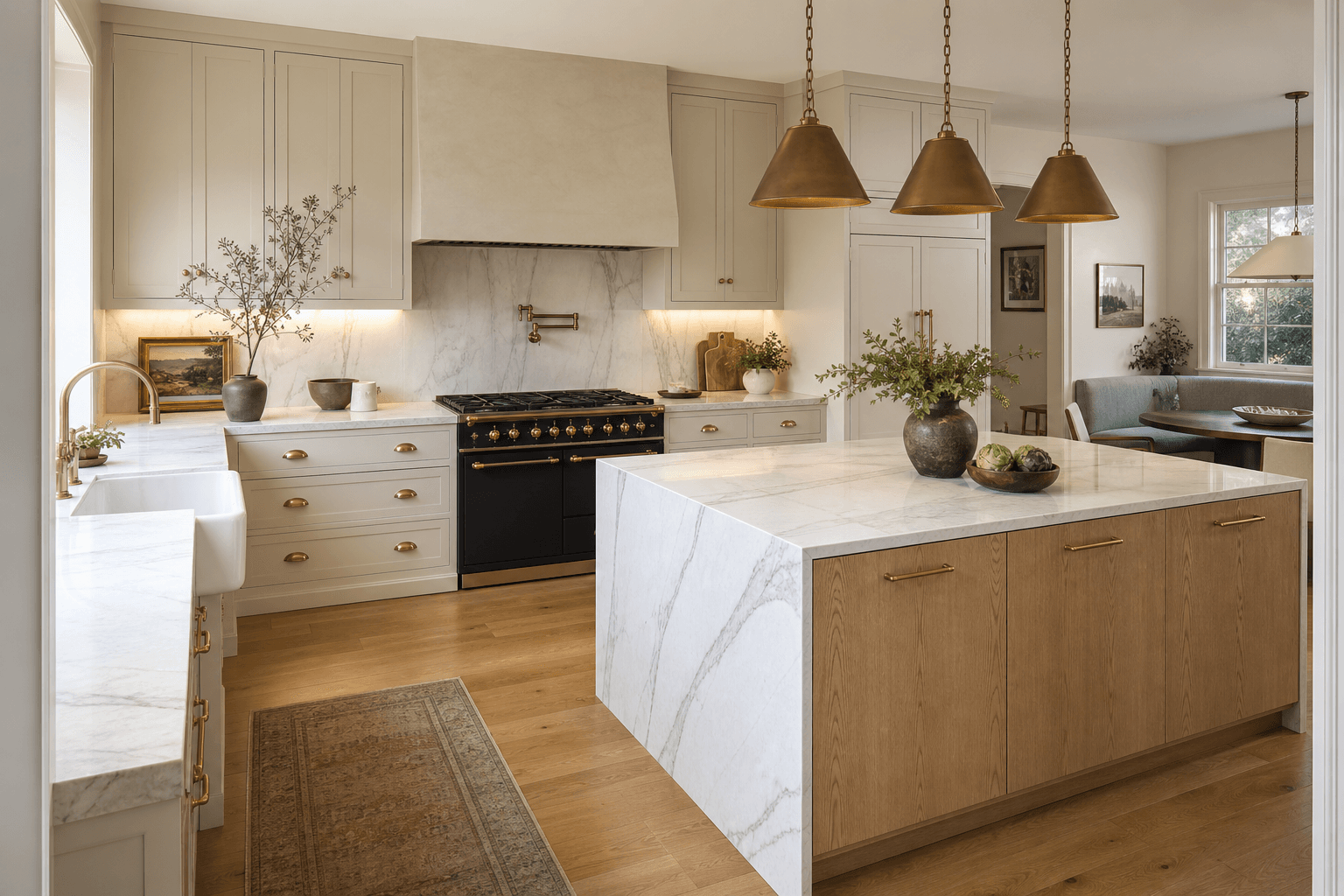
Service
Kitchen Remodel
Scope-built kitchens. Most projects 2-6 weeks from demo to final walk.
See scope + examples
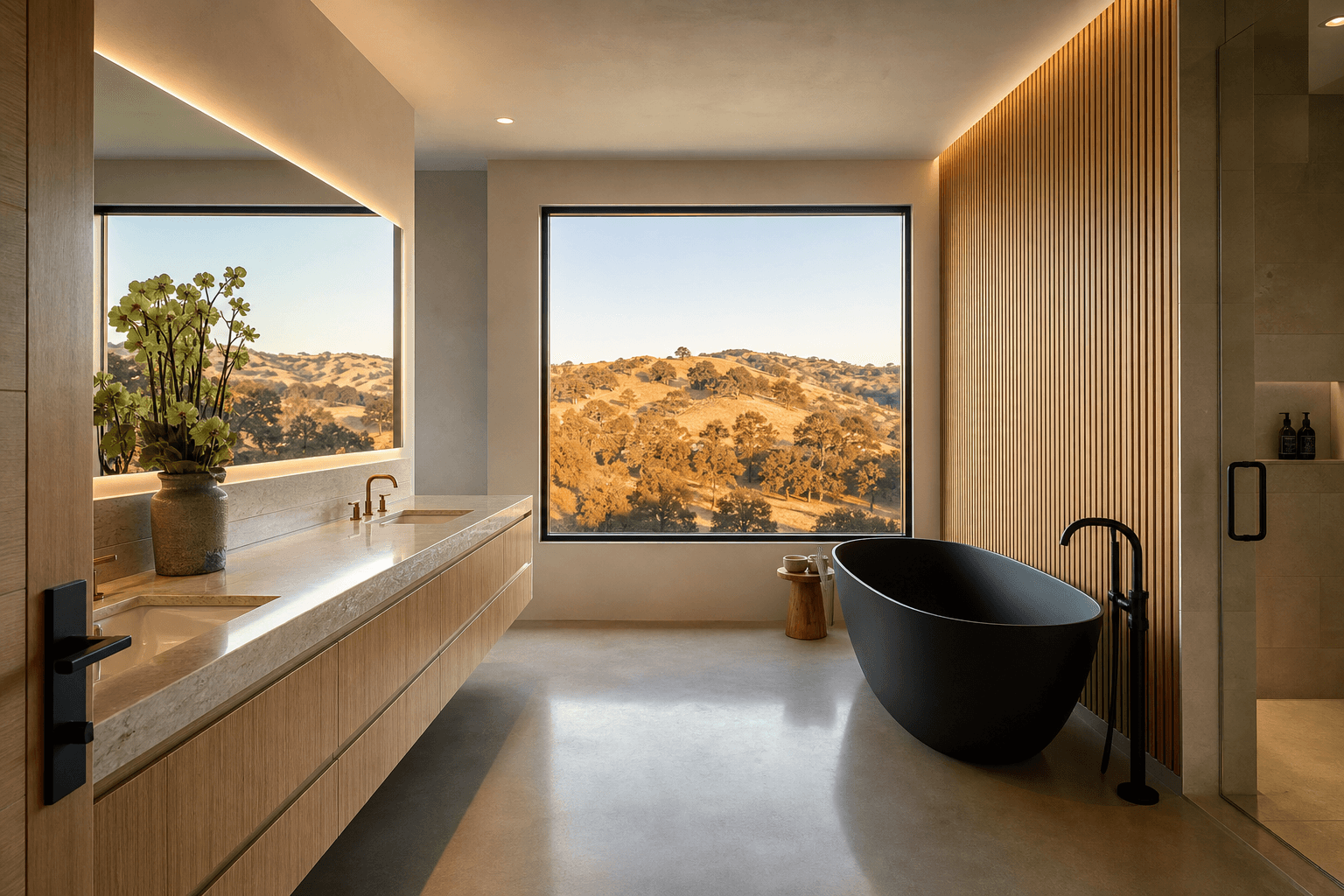
Service
Bathroom Remodel
Scope-built quotes after an in-home walk by a Project Manager.
See scope + examples
Article · Sacramento
How to vet a Sacramento contractor before you sign anything
Ten things to check on any Sacramento remodel contractor before you sign — license, insurance, references, contract structure, deposit cap, and the soft signals that tell you who's running a real business and who isn't.
Keep reading
Article · Sacramento
How to read a Sacramento kitchen remodel quote (and 7 line items most homeowners miss)
Comparing kitchen remodel bids in Sacramento is hard because no two contractors itemize the same way. Here is exactly what should be in every quote, what the seven most-missed line items are, and how to spot a low bid that is going to balloon.
Keep reading
Ready to start your project?
Free in-home consultation. No pressure.