

pergolas-shade-structures · Granite Bay
Pergola permits in Placer County: a homeowner's guide
May 16, 2026 · Tanbark Build Co.
When a pergola needs a permit
In Placer County (Granite Bay, Loomis, Rocklin, Lincoln, unincorporated Placer) the test is one of these conditions:
- Over 120 sq ft of roof area. A small attached shade structure on an existing patio that stays under 120 sq ft generally does not require a permit; anything larger does.
- Any gas connection. A propane or natural gas line for a fire feature or a heater changes the permit category — it adds a mechanical inspection.
- Any electrical. Low-voltage pendant lighting under 12V usually flies under the radar; anything 120V (sconces, ceiling fan, dedicated GFCI outlet) requires an electrical permit.
- Permanent attachment to the house. A pergola attached to the home (lag-bolted into a ledger board) almost always needs a permit because it changes how the home handles wind and snow load.
- Wind/snow load thresholds. Placer County engineering standards trigger an engineering review whenever the pergola exceeds certain dimensions (typically 12 ft height or 200 sq ft regardless of attachment).
Most of the projects we do qualify under at least one of these. Plan for the permit unless your structure is small, freestanding, sub-120 sq ft, and has no gas or 120V electrical.
What the permit application requires
A Placer County pergola permit application typically includes:
- Site plan showing the structure footprint, setbacks from property lines, and distance to the house and any other structures.
- Engineered structural drawings. For any pergola attached to the home or exceeding the dimension thresholds above, you'll need stamped drawings from a California-licensed structural engineer.
- Cross-section detail showing footing depth (typically 12-18 inches for Placer County), post size, beam size, and connection method.
- Roof load + wind load calculations. The engineer's stamp covers these.
- Cover materials spec. Aluminum louvered roof, polycarbonate panels, fabric retractable — the inspector wants to know what's overhead because that drives the wind-load calculation.
For an attached cedar pergola with an aluminum louvered roof (the most common premium build we do), the application package is typically 8-12 pages.
Plan-check timeline
- Online submission: Placer County uses an online permit portal; most pergola applications are submitted there.
- Plan check: 2-4 weeks for residential pergolas. Engineered structures sometimes route to a senior reviewer, which adds another week.
- Revisions: if the inspector requests changes (sometimes about setback distances or footing detail), each revision round adds 1-2 weeks.
- Permit issuance: once approved, the permit is valid for 12 months and must be inspected at footing pour and at final.
Total realistic timeline from application to "permit in hand" is 3-6 weeks. Plan accordingly.
Inspections
Two inspections for a typical permitted pergola:
Footing inspection. Done after the holes are dug and the rebar cage is in, BEFORE the concrete pour. The inspector wants to see:
- Footing diameter and depth match the engineered drawings.
- Rebar size and tying detail.
- Soil conditions (loose soil triggers a larger footing or a different design).
- Setback distances from property lines.
Final inspection. Done after the structure is fully built and (if applicable) electrical and gas are connected. The inspector wants to see:
- Post bases match the spec (Simpson galvanized standoff, typically).
- Beam-to-post connections per the drawings (lag bolts, post caps).
- Ledger attachment (if attached to the house).
- Roof material installed correctly.
- Electrical and gas work pass independently.
Common ways a pergola permit goes sideways
- Footing depth. Placer County wants 12-18" minimum depending on soil and structure. We've seen homeowners pour 8" footings and have to break them out and re-pour. Painful and expensive.
- Setback violations. Property line setbacks vary by zoning. In most of Granite Bay/Loomis residential zoning, 5 ft minimum from the side property line. Check with the county before you dig.
- Wrong attachment method. Pergolas screwed into stucco instead of lag-bolted through to studs/blocking fail final inspection routinely. Always lag through.
- Skipping engineered drawings on an attached structure. Inspectors will not approve an attached pergola without stamped drawings.
What it costs (in scope, not dollars)
A permitted attached cedar pergola in Granite Bay or Loomis is a mid-tier-to-premium project depending on:
- Whether the roof is fixed cedar slat, polycarbonate, or motorized aluminum louvered.
- Whether the pergola is wired for evening pendants + smart controls.
- Whether the cedar is stained on-site (warmer, custom color) or pre-stained.
- Whether the footings need over-spec (foothill soil, clay, or near-creek conditions).
Most attached aluminum-louvered pergolas in Placer County are premium scope — engineered, permitted, structurally robust, with motorized cover and integrated lighting.
The shortcut that's not a shortcut
Some homeowners (and unfortunately some contractors) skip the permit on attached pergolas reasoning it's "just a shade structure." Two problems:
1. Resale flag. Placer County permit history is online. A buyer's inspector flags an un-permitted attached structure immediately, especially one with electrical.
2. Insurance. If an un-permitted pergola fails (high wind, snow load) and damages the home or injures someone, your homeowner's policy may decline the claim because the structure wasn't permitted.
The few weeks of plan-check time is worth it.
The walk-through
A Tanbark project manager comes out, measures the yard, reviews setbacks with you, and walks through which permit applies. For attached structures we coordinate the structural engineer directly so the homeowner sees one estimate, not two. You get an itemized written estimate within 48 hours.
Free · No spam · No phone calls
Get the 2026 Sacramento Remodel Planning Kit.
Five planning tools we built for our own customers — scope worksheet, contractor question list, permit reality check, budget blow-up warnings, and our material spec sheet. Sent instantly to your inbox.
- Scope-Built Quote Worksheet — for apples-to-apples bids
- 10 questions every Sacramento contractor should answer
- Sacramento permit reality check by jurisdiction
- The 5 line items that blow most remodel budgets
- Material + finish cheat sheet (what to spec, what to skip)
Keep reading
Real Sacramento projects, scope guides, and articles paired with this piece.
Design concept
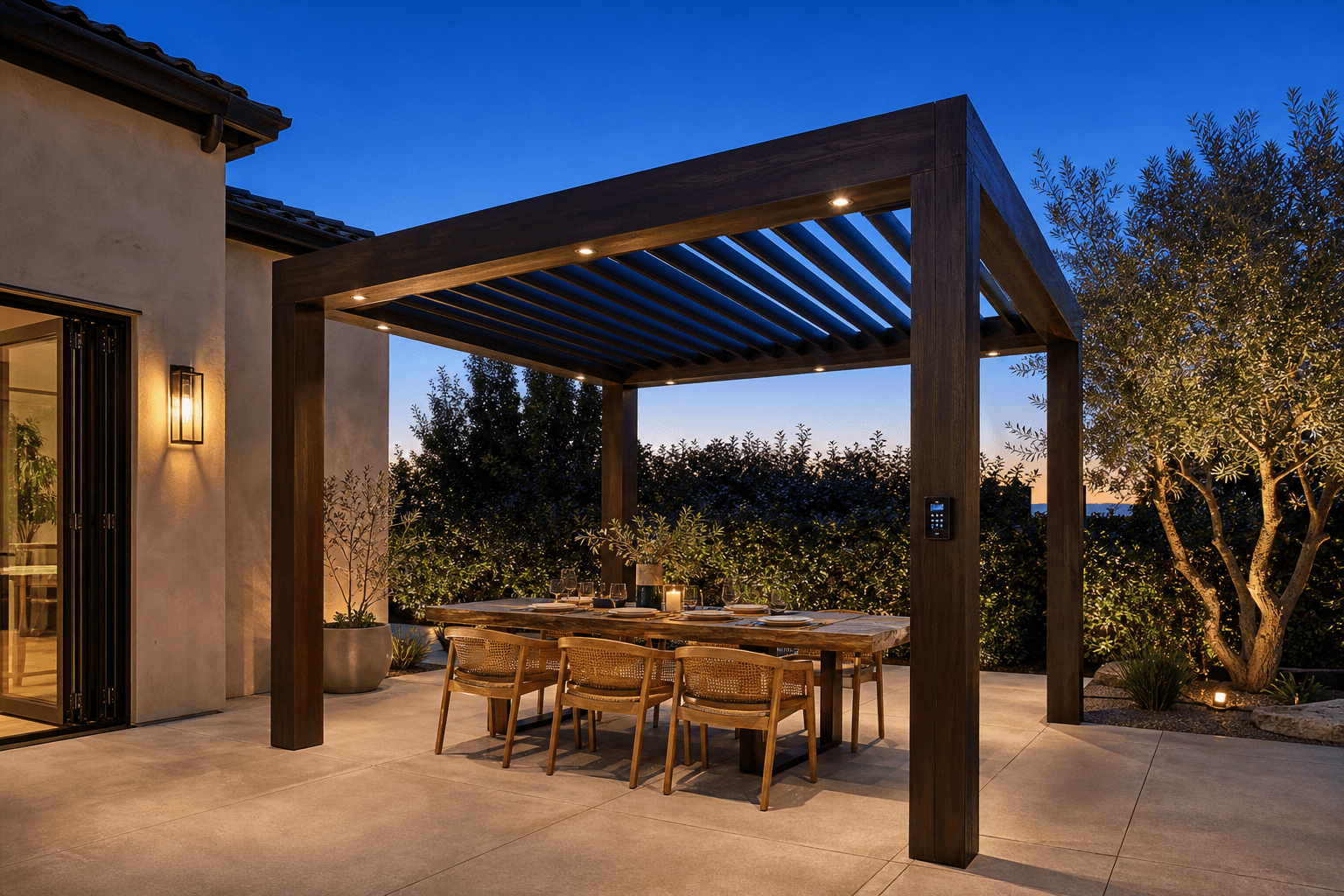
Motorized pergola
Dark-stained cedar pergola with a motorized matte-black aluminum louvered roof. Wired for evening pendants and a wall-mounted touch controller. Built to extend an existing patio.
See the scope
Service
Pergolas
Scope-built quotes. Most pergolas installed in 1-3 weeks once permits clear.
See scope + examples
Article · Sacramento
Outdoor kitchens in Sacramento: gas, water, electrical, and the permit they all need
What a real built-in outdoor kitchen needs under the slab — gas, water, GFCI, drainage — and why every Sacramento-area jurisdiction permits this work. Plus what separates a contractor-grade build from a custom one.
Keep reading
Ready to start your project?
Free in-home consultation. No pressure.