

outdoor-kitchens · Sacramento
Outdoor kitchens in Sacramento: gas, water, electrical, and the permit they all need
May 19, 2026 · Tanbark Build Co.
What "outdoor kitchen" actually means
Most homeowners use "outdoor kitchen" to mean anything from a freestanding grill on wheels to a fully built-in L-shaped cook station with a 36" pro grill, side burner, beverage drawer, sink, and bar seating.
For this article, we're talking about the second one — a built-in, plumbed-in, electrically-wired outdoor kitchen, which is what every premium Sacramento outdoor kitchen project actually is.
That kind of build needs three utility runs and at least one permit. Skip any of them and you've built a yard ornament, not a kitchen.
The three utility runs
Gas line. If you have a propane or natural gas grill (almost every pro-grade grill is gas), the gas line typically runs from the home's main supply (or a dedicated propane tank) under the patio slab to the kitchen footprint. Pre-running the line BEFORE the patio pours is what separates a clean install from a build with exposed conduit climbing up the side of the structure.
Water line. A sink in the outdoor kitchen means a freeze-rated supply line and an indirect drain. In Sacramento's climate we typically use insulated PEX with a winterization shut-off inside the garage. Drains can be tied to the home's main waste line if proximity allows, otherwise into a properly-sized dry well.
Electrical. A built-in outdoor kitchen needs at minimum a 20A GFCI-protected circuit for the side burner ignition, beverage drawer, and any in-built receptacles. Premium builds add a dedicated lighting circuit (often for hand-blown pendants overhead) on its own dimmer.
All three of these are routed under the patio slab BEFORE the pour. Once the concrete is down, retrofitting is brutal.
The permit
Every Sacramento-area jurisdiction permits outdoor kitchens. The plumbing inspector covers the gas line, the electrical inspector covers the GFCI circuit and lighting, and (if you have a sink) the plumbing inspector also covers the supply + drain.
City of Sacramento: combined permit for gas + electrical issued same-day or within 1-2 business days. Two or three separate inspections depending on the scope.
Roseville: same pattern, online portal, 1-2 business days. Roseville inspectors are particularly thorough on gas line testing — they pressure-test the line for leaks at rough.
Folsom: same. Folsom often requires the gas line shut-off to be in a specific accessible location, separate from the kitchen island itself.
Placer County (Granite Bay, Loomis, Rocklin, Lincoln): plan-check is sometimes longer (3-7 business days) for structures over a certain footprint. Engineered drawings are required if you're tying gas into a covered structure (e.g. under a pergola).
El Dorado County: similar to Placer. EDH inspectors enforce the bonding requirement strictly — every gas appliance in the kitchen needs to be properly bonded.
Sacramento County (unincorporated Carmichael, Fair Oaks): standard online permit, 1-3 business days.
What a custom build looks like
The visible parts are what people Pinterest:
- L-shaped or U-shaped layout with the cook station on one wall and a bar or prep counter on the other.
- Honed soapstone or quartzite counter with a mitered edge.
- Stone or porcelain cladding on the island base (often matching the home).
- Pro-grade grill (36"+), side burner, beverage drawer, sometimes a kamado or pizza oven.
- Backsplash in zellige, slate, or large-format porcelain.
- Hand-blown pendants or warm-LED pucks on a dimmable circuit overhead.
The invisible parts are what makes it last:
- Steel framing under the stone cladding. Galvanized steel studs with cement-board substrate. Wood framing in an outdoor kitchen rots inside 5-7 years.
- Pre-run utilities under the slab. Gas, water, electrical all routed before the patio pours. Conduit stubs come up exactly where the appliances land.
- Drainage in the base. Even a covered island sees water (rain, hose, condensation). Weep holes at the base of the stone cladding let water out instead of trapping it.
- Proper appliance ventilation. A 36" pro grill needs at least 24" of side clearance from any combustible material, plus the ventilation cuts the manufacturer specifies.
What separates contractor-grade from custom
Three details, in order of importance:
1. Whether the utilities are pre-run. A built-in island sitting on top of a finished slab with conduit climbing up the back is contractor-grade. Same island with utilities coming up through the slab exactly where they need to be is custom. The difference is one hour of planning and a coordination call before the patio pour.
2. Counter edge. A standard square edge looks fine. A mitered edge (where the front and side stone faces meet at a 45° join) looks like architecture. Different fabrication time, different price, very different read.
3. Real backsplash material. Cheap subway tile reads catalog. Zellige, hand-cut limestone, or a single slab of stone reads custom. Backsplash is the smallest line item by square footage but the largest visual differentiator.
What you give up when you "save" on the wrong line item
- Save on the steel framing: the kitchen rots inside 7 years.
- Save on the gas line install: the inspector fails you, you re-do.
- Save on the counter: you replace it in 5 years.
- Save on the appliances: they fail outside the warranty window because home-grade appliances aren't rated for the heat and humidity of an outdoor build.
The line items worth saving on are visible decorations — accent lighting fixtures, decorative tile insets. Skip the structural and utility shortcuts.
How long it takes
A standard Sacramento outdoor kitchen build runs 18-25 working days from demo to live-fire test, assuming the patio is being poured as part of the same project. Existing patio? 12-18 days.
The longest pole is usually appliance lead time. Pro-grade grills and beverage drawers from premium brands run 4-8 weeks lead. Order the day you sign.
The walk-through
A Tanbark project manager walks the yard with you, identifies the right L or U footprint for the sightlines from the home, confirms what permits apply, and brings back an itemized written estimate within 48 hours.
Free · No spam · No phone calls
Get the 2026 Sacramento Remodel Planning Kit.
Five planning tools we built for our own customers — scope worksheet, contractor question list, permit reality check, budget blow-up warnings, and our material spec sheet. Sent instantly to your inbox.
- Scope-Built Quote Worksheet — for apples-to-apples bids
- 10 questions every Sacramento contractor should answer
- Sacramento permit reality check by jurisdiction
- The 5 line items that blow most remodel budgets
- Material + finish cheat sheet (what to spec, what to skip)
Keep reading
Real Sacramento projects, scope guides, and articles paired with this piece.
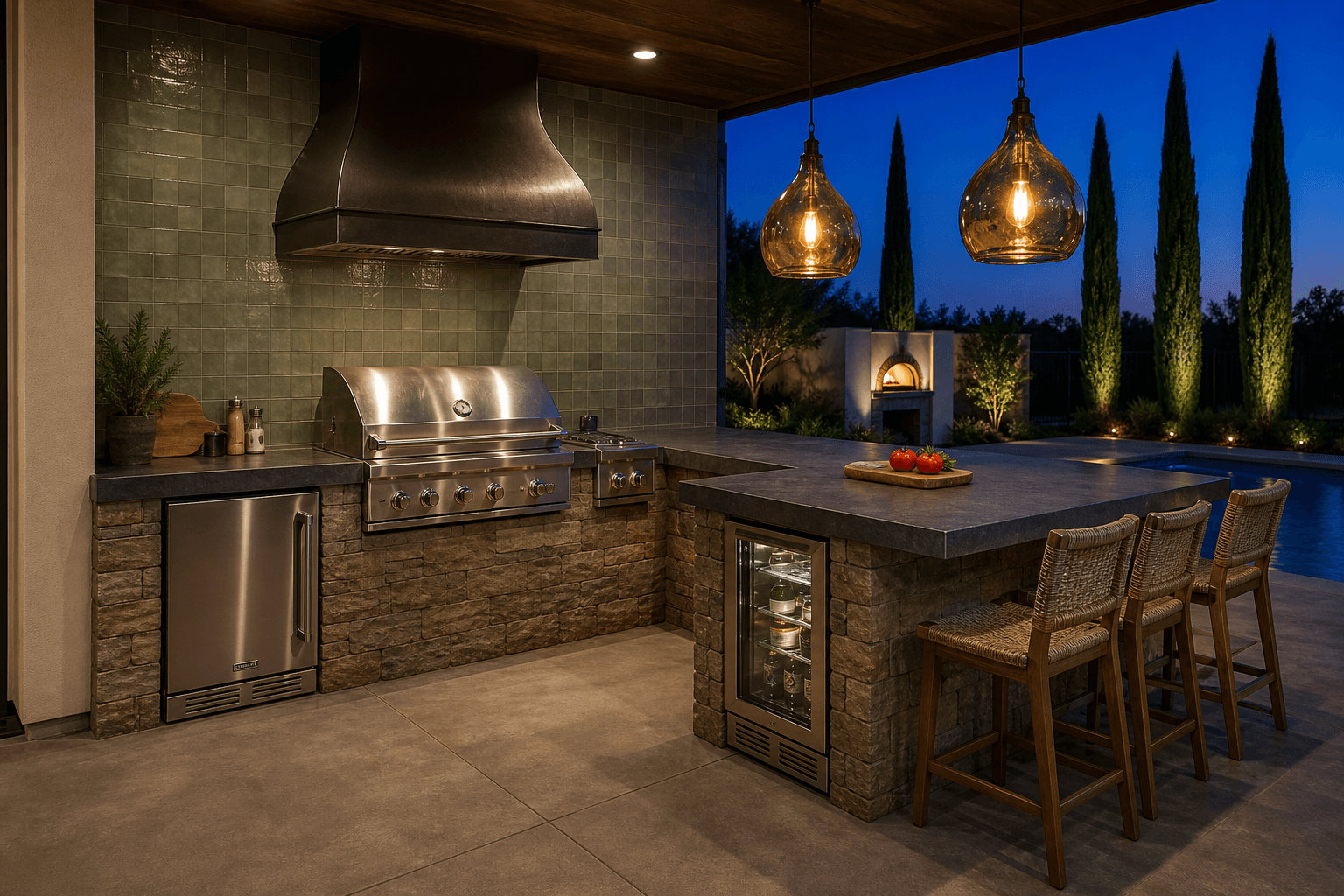
Design concept
Soapstone outdoor kitchen
L-shaped built-in with honed soapstone counters, stainless 36" grill + side burner, beverage drawer, sage zellige backsplash, and hand-blown amber-glass pendants overhead.
See the scope
Service
Outdoor Kitchens
Scope-built quotes. Most outdoor kitchens delivered in 6-10 weeks once permits clear.
See scope + examples
Article · Granite Bay
Pergola permits in Placer County: a homeowner's guide
What it actually takes to permit a pergola in Placer County — when you need engineered drawings, when you don't, and what the inspector is looking for on the day of inspection.
Keep reading
Ready to start your project?
Free in-home consultation. No pressure.